In 1672, a handwritten folio was discovered in the San Marco monastery, its author unnamed. Among alchemical diagrams and astrological calculations was a drawing of a figure wearing a beaked mask, surrounded by symbols resembling sigils from the Hermetic tradition. The caption read: “Persona medica transmutatoria - inter corpus et spiritus, ignis est.” - “The transformative physician stands between body and spirit - fire is the medium.”
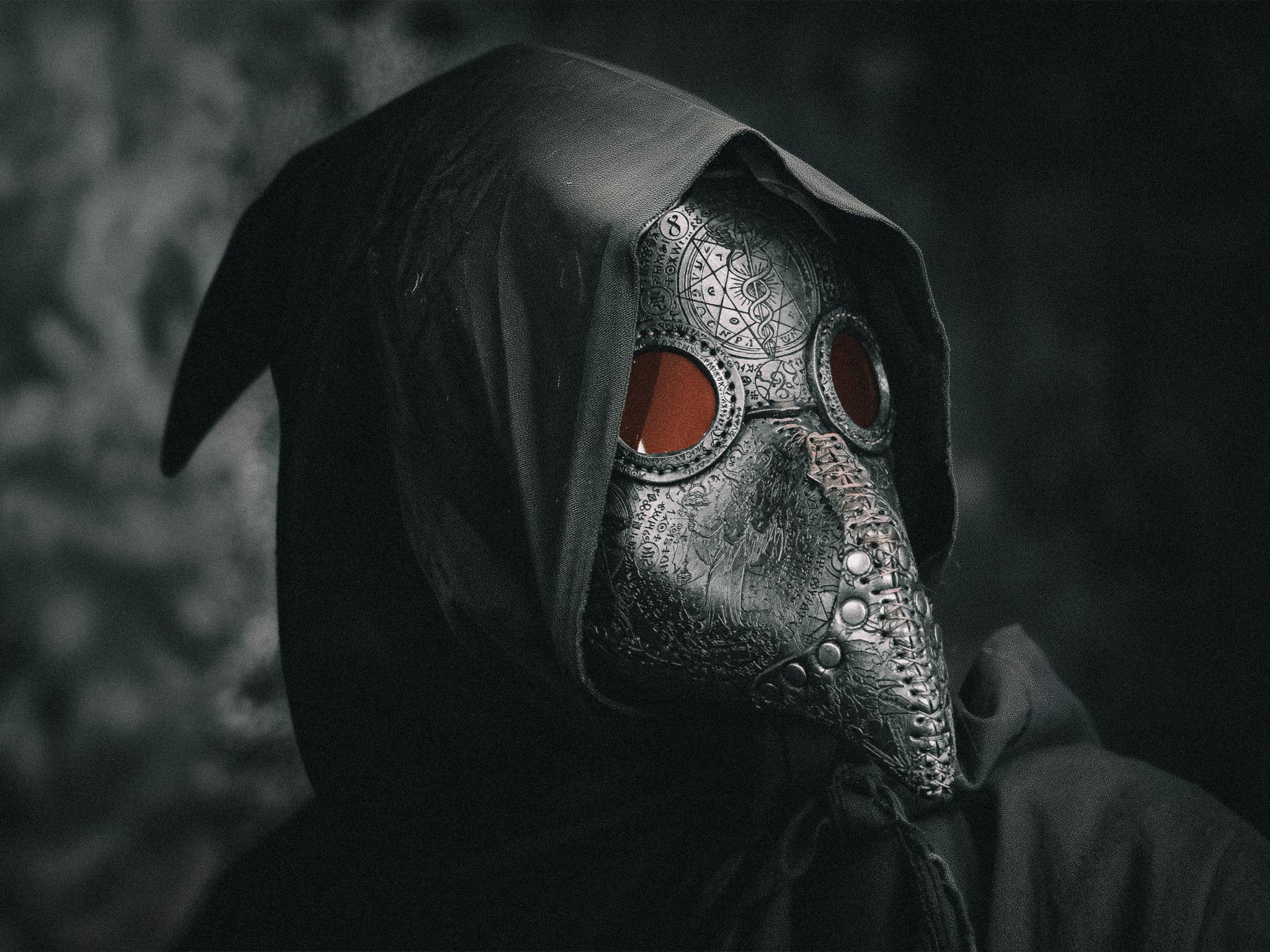
This image reflects a late medieval understanding of illness as a disruption of internal harmony. The physician confronting the plague was seen as a bearer of knowledge connecting the physical, celestial, and alchemical. According to the notes, the mask functioned as a tool for perception and focused introspection, designed to support the alignment between inner and outer order.
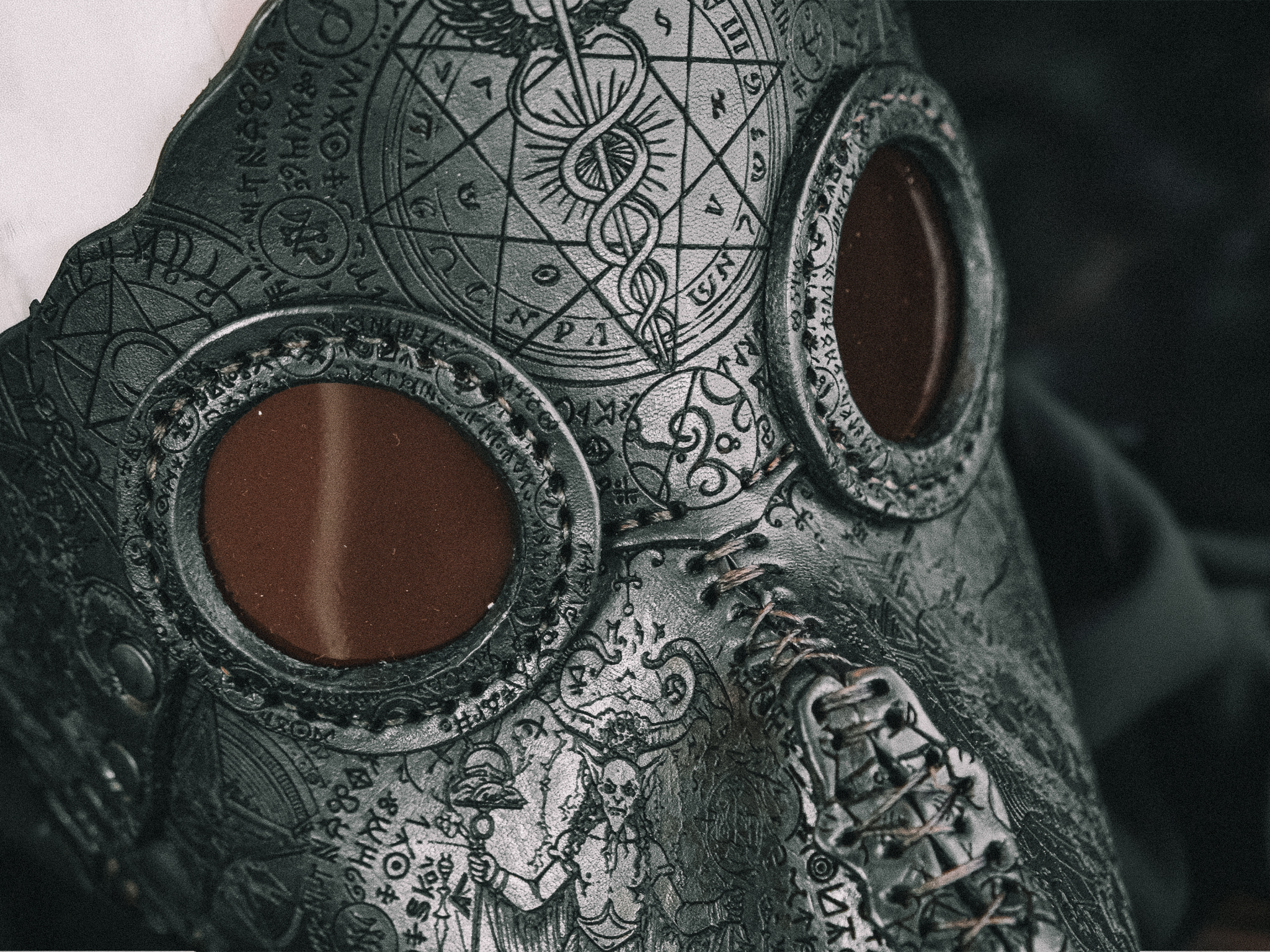
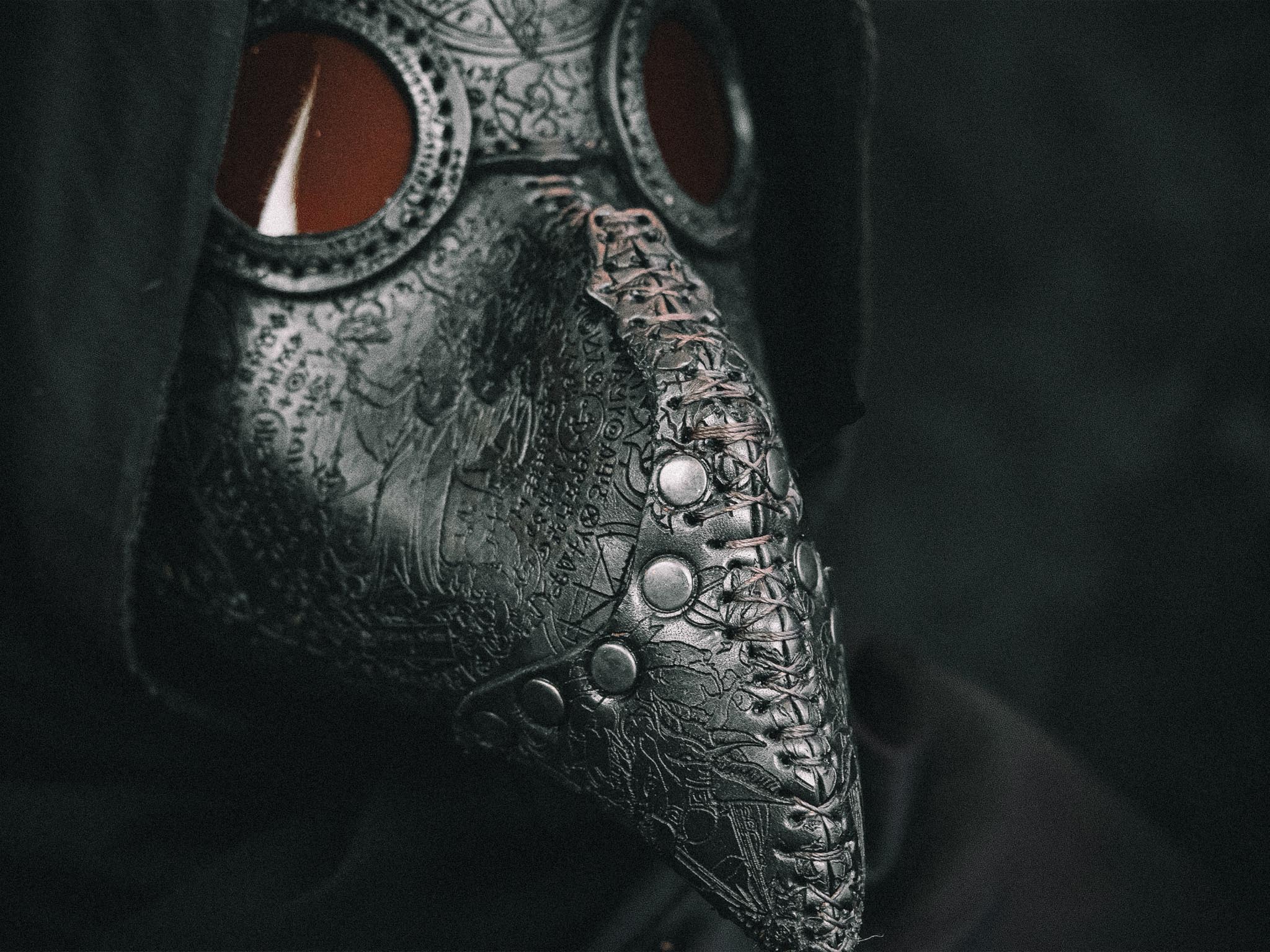
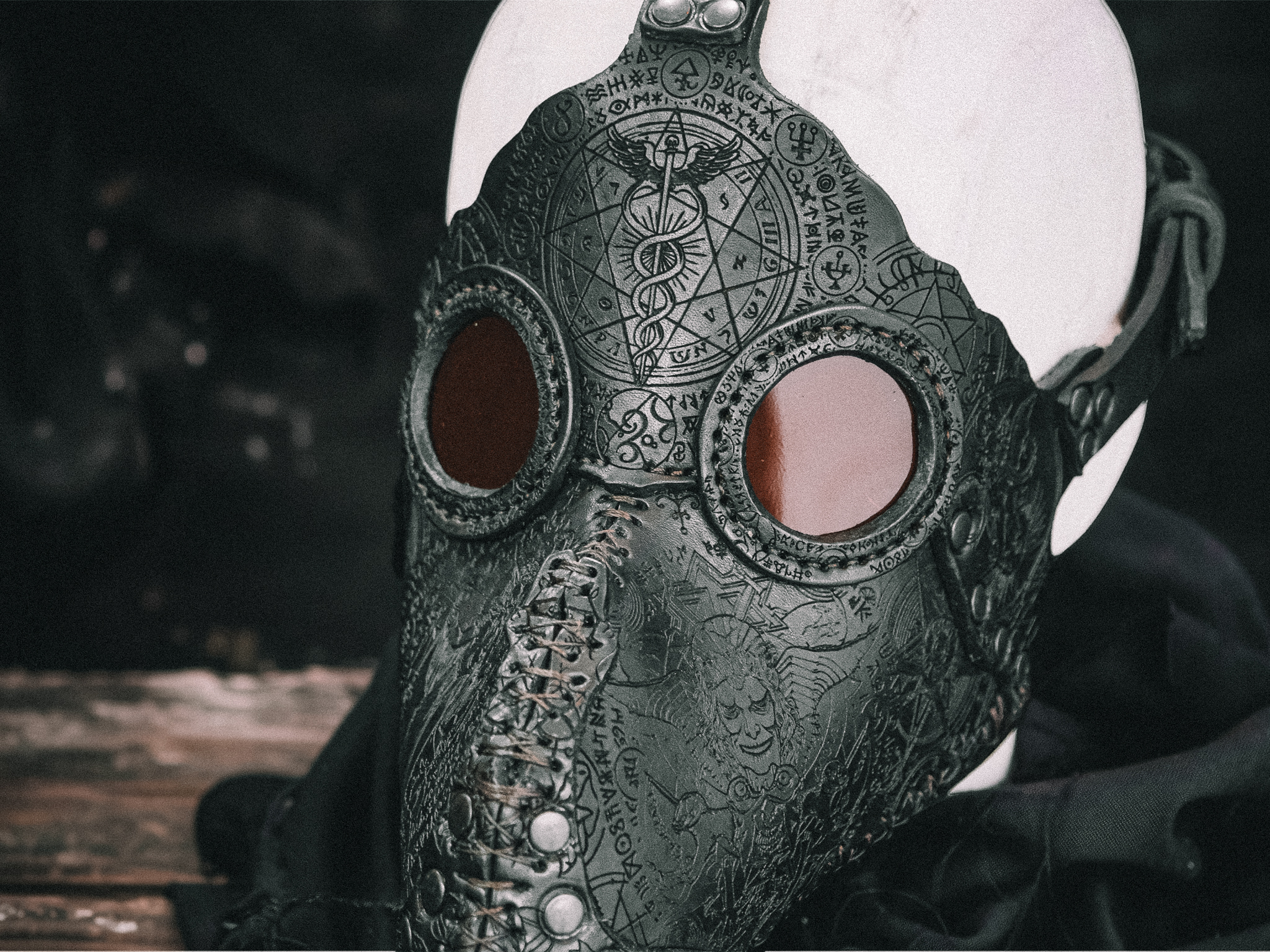
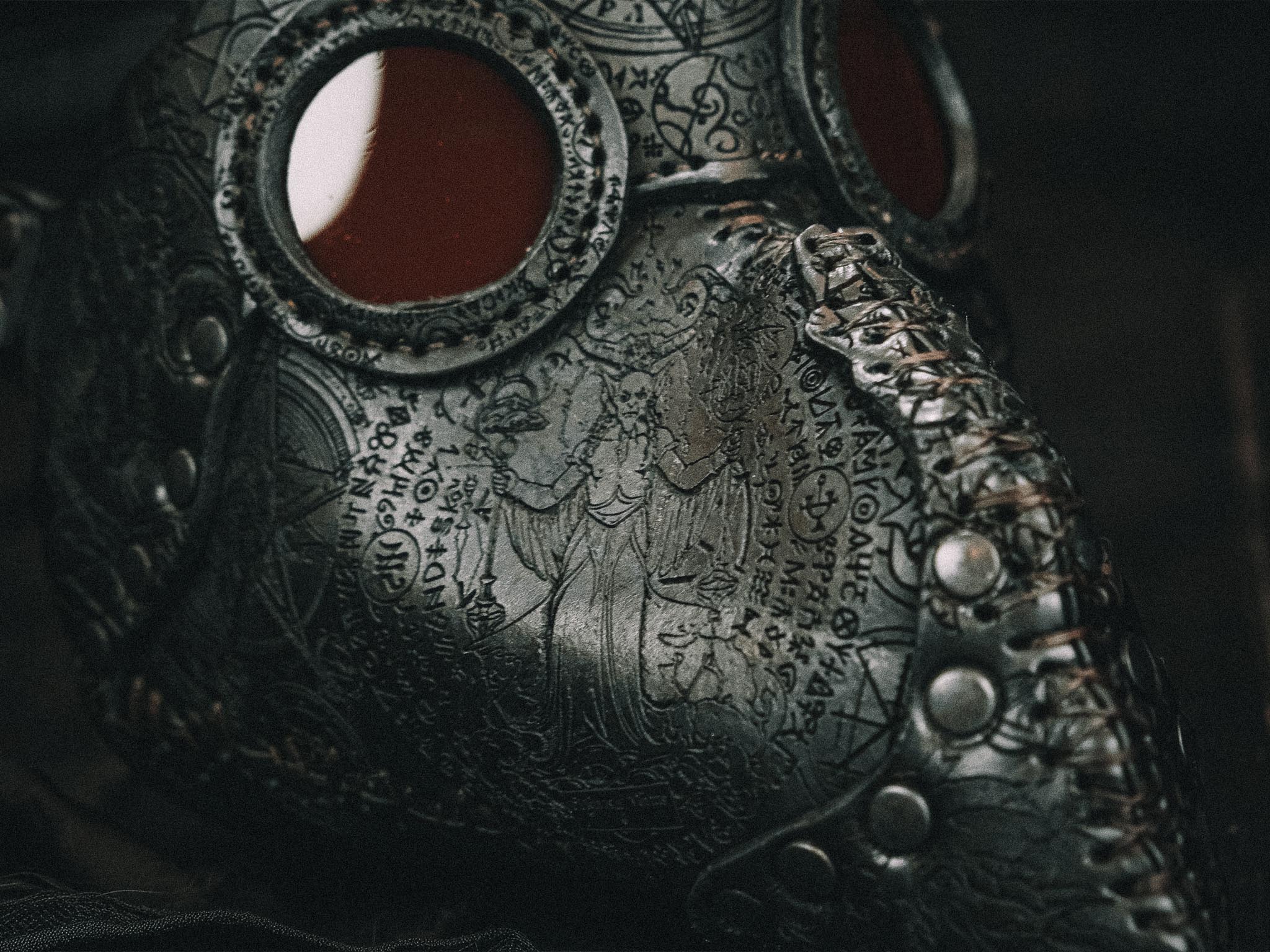
The engraving follows the same principle. Above the line of the beak are elemental glyphs; around the eyes - signs of discernment; on the crown - a circle divided into four segments, each corresponding to a phase of the alchemical process: decomposition, purification, illumination, completion. The composition forms a closed path - a symbolic cycle returning the practitioner to balance.
The goal in creating the mask was not to replicate a historical form but to convey its inner structure. Every element of the engraving was conceived as a tool of thought: vessels, emblems, intersecting lines, and encoded formulas work together as a framework for contemplating the archetype described in the manuscript.
This mask was designed as an object that holds the idea of the physician-alchemist. It presents itself as a visual code focused on transformation - through knowledge, material, and the discipline of contemplation.

 Add text engraving