The idea that witches may have helped plague doctors is unlikely to appear in any chronicles.
History leans toward structure. It prefers events with clear roles, defined outcomes, and documented language.
But outside the written record, another space exists - unstable, ambiguous, more alive.
Here, suggestions, fears, and fragments remain - things that can't be measured, yet can still be felt.
This was the starting point.
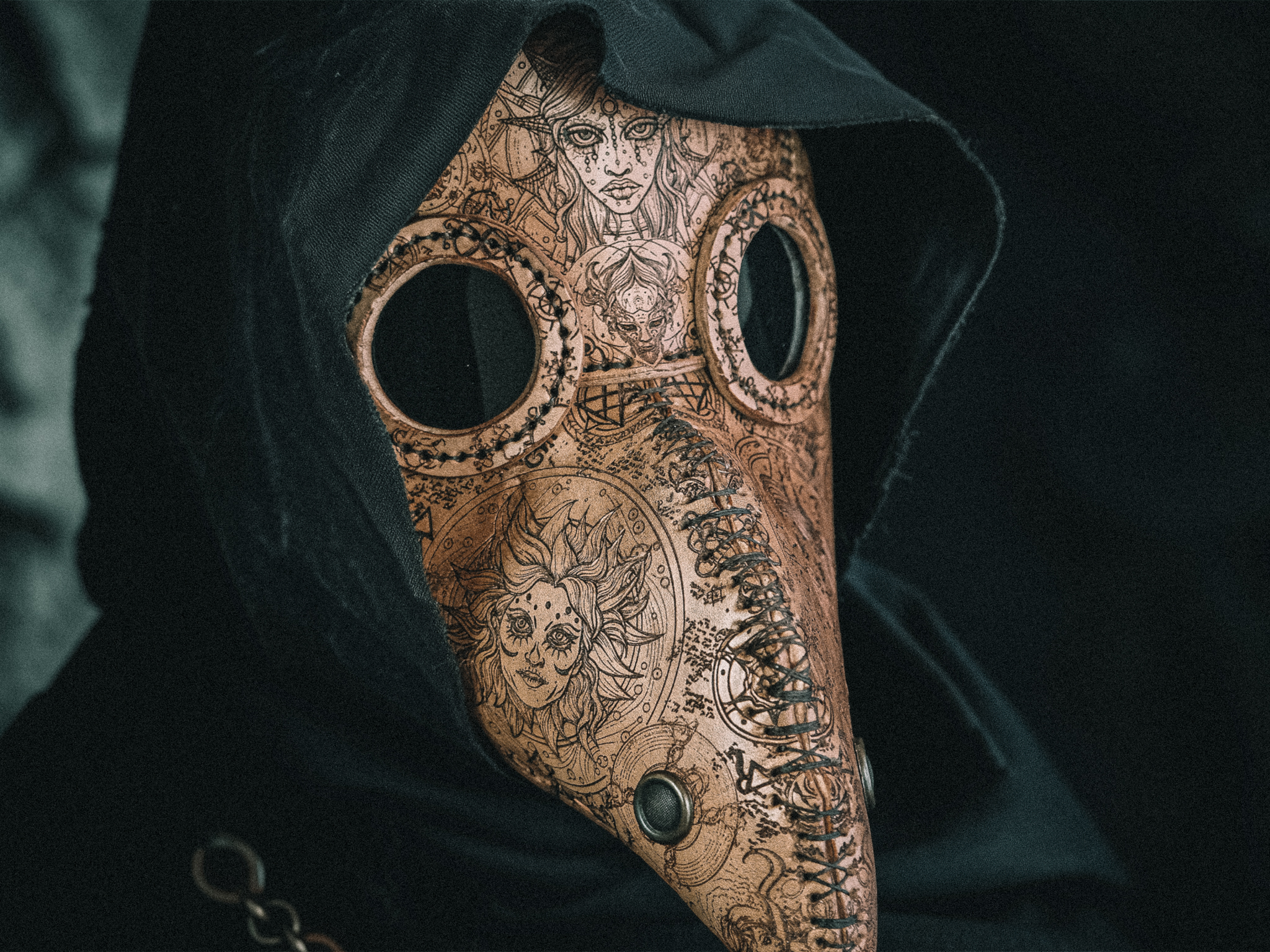
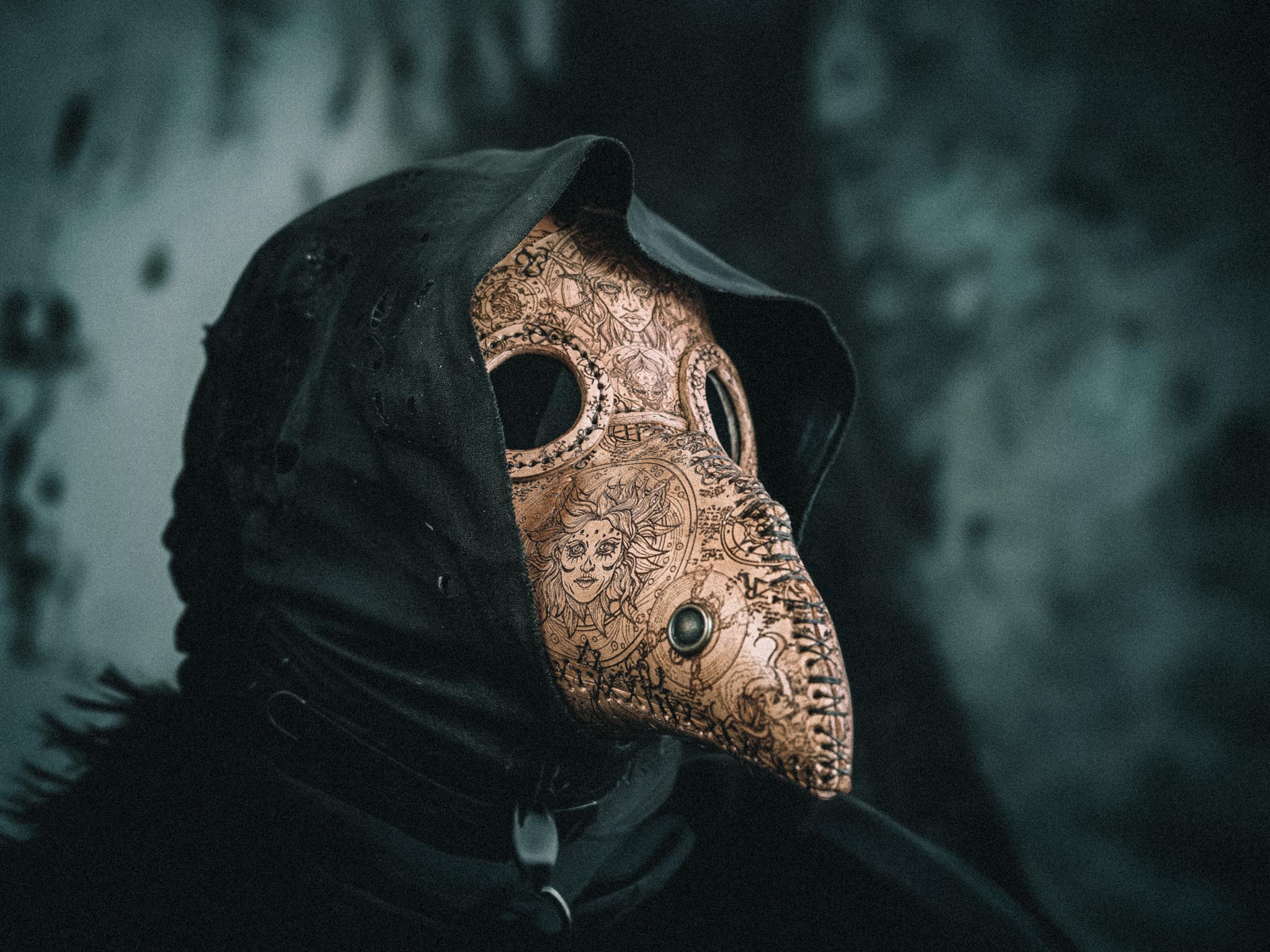
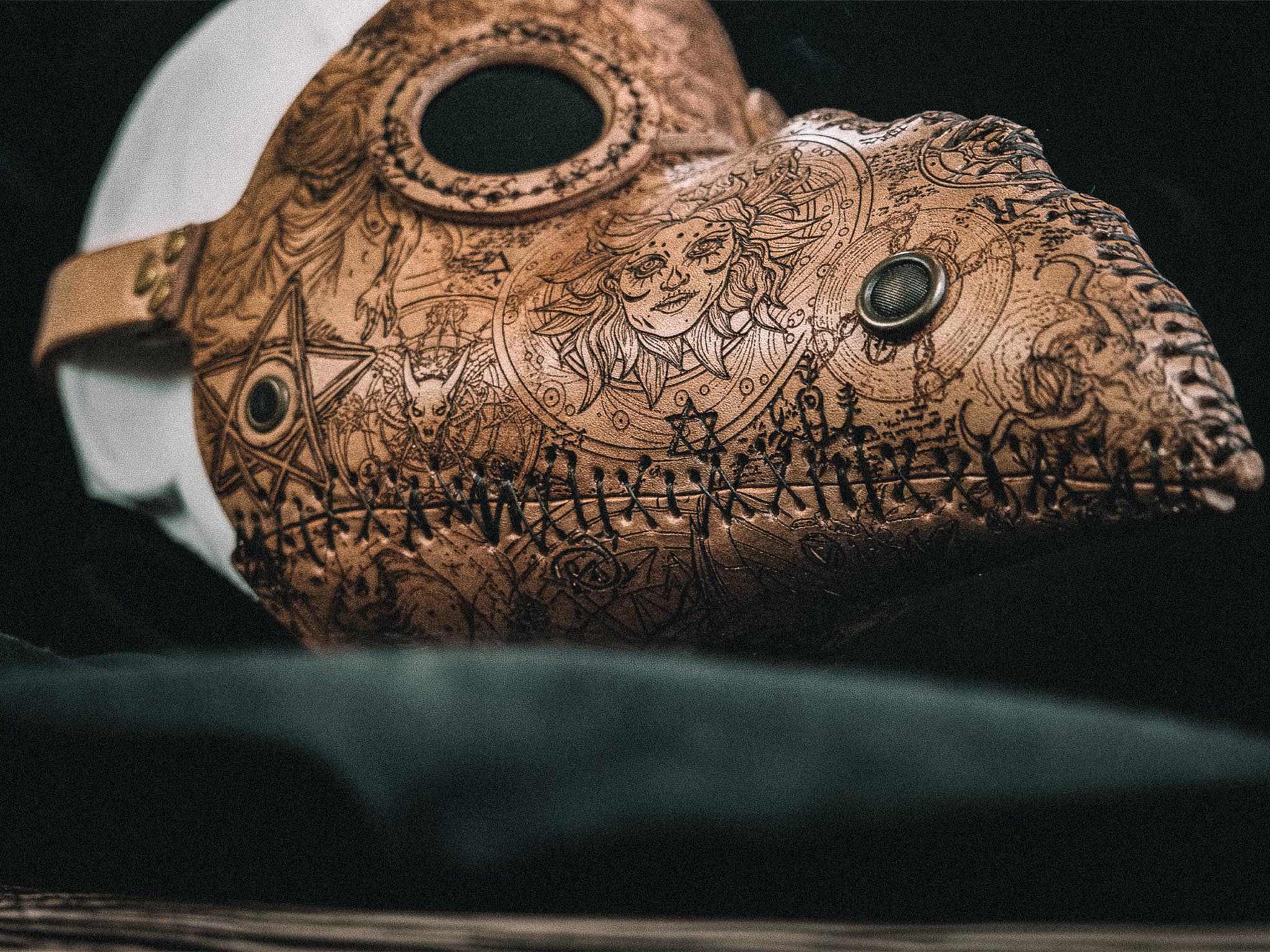
The mask emerged from a desire to work with an image that has no fixed origin.
The figure of a doctor, acting through duty, and the figure of a woman with knowledge beyond system - two paths moving in separate directions.
At times, those paths cross, and that intersection creates interest.
Not a story, not a plot - more a sense of contact between approaches, between logic and intuition, necessity and inner knowing.
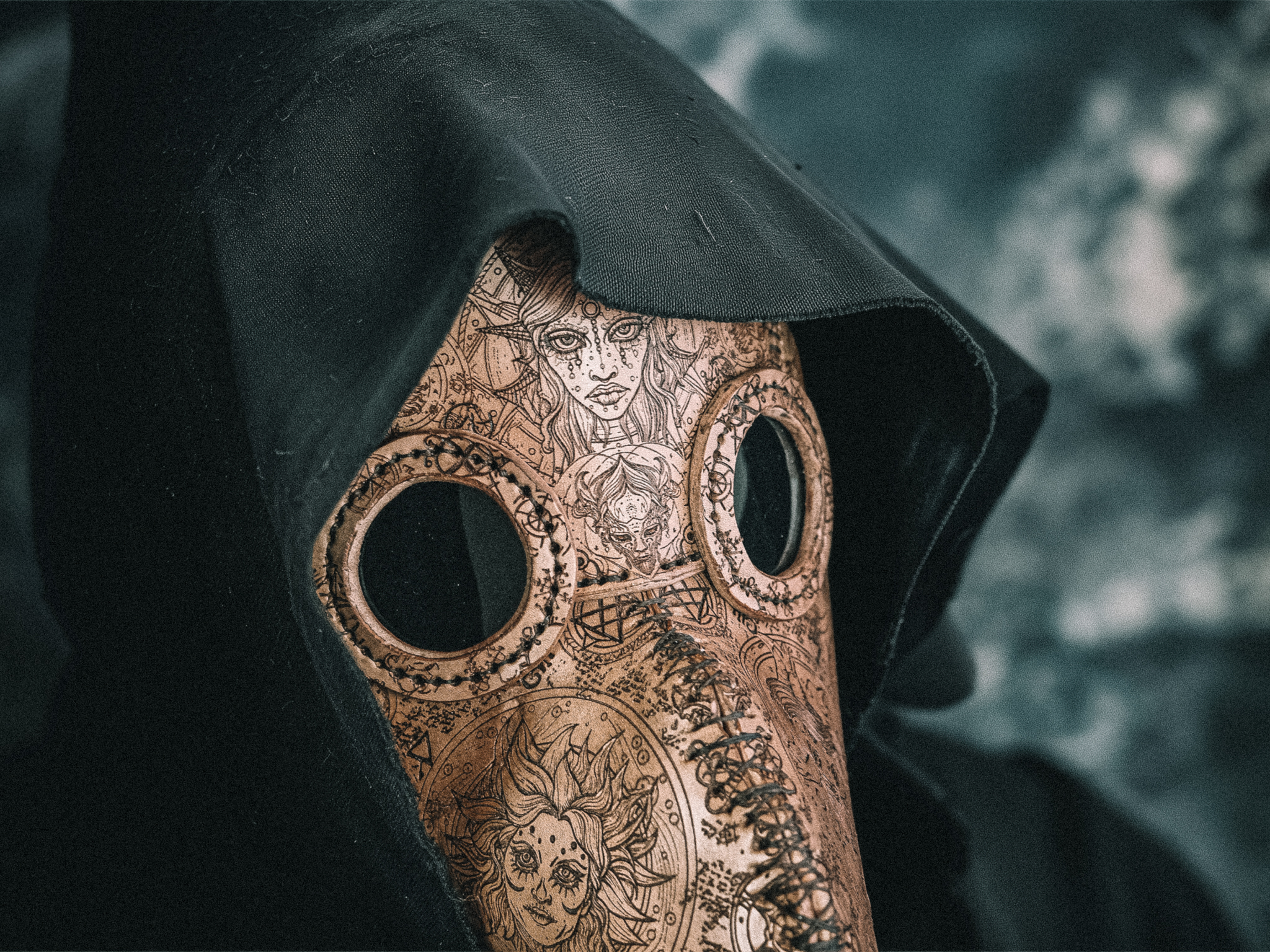
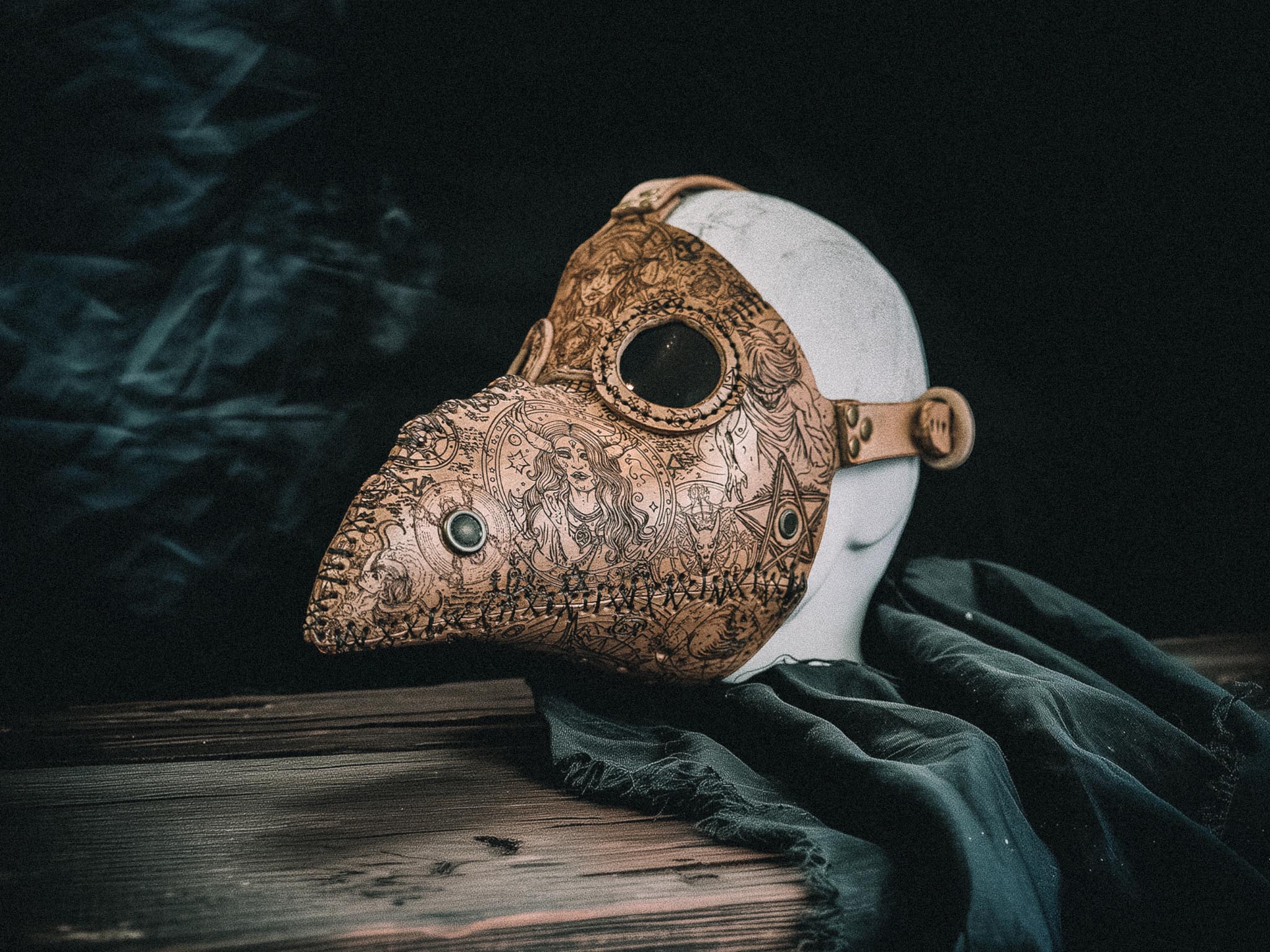
The engraving developed as part of this idea.
It offers no conclusions and names no characters.
Its purpose is to support a form where the question itself can stay present.
This approach does not follow decoration or literal imagery.
Each detail on the surface contributes to the rhythm of a focused, attentive, open state.
The mask doesn't explain.
It invites a pause within a thought that never made it into textbooks but continues to live in image.
Everything needed for perception is already there - in the material, in the lines, in the way the parts hold together.
Working with such an object is less about telling and more about observing.
And in that observation, something begins to emerge - something that rarely speaks out loud.

 Add text engraving