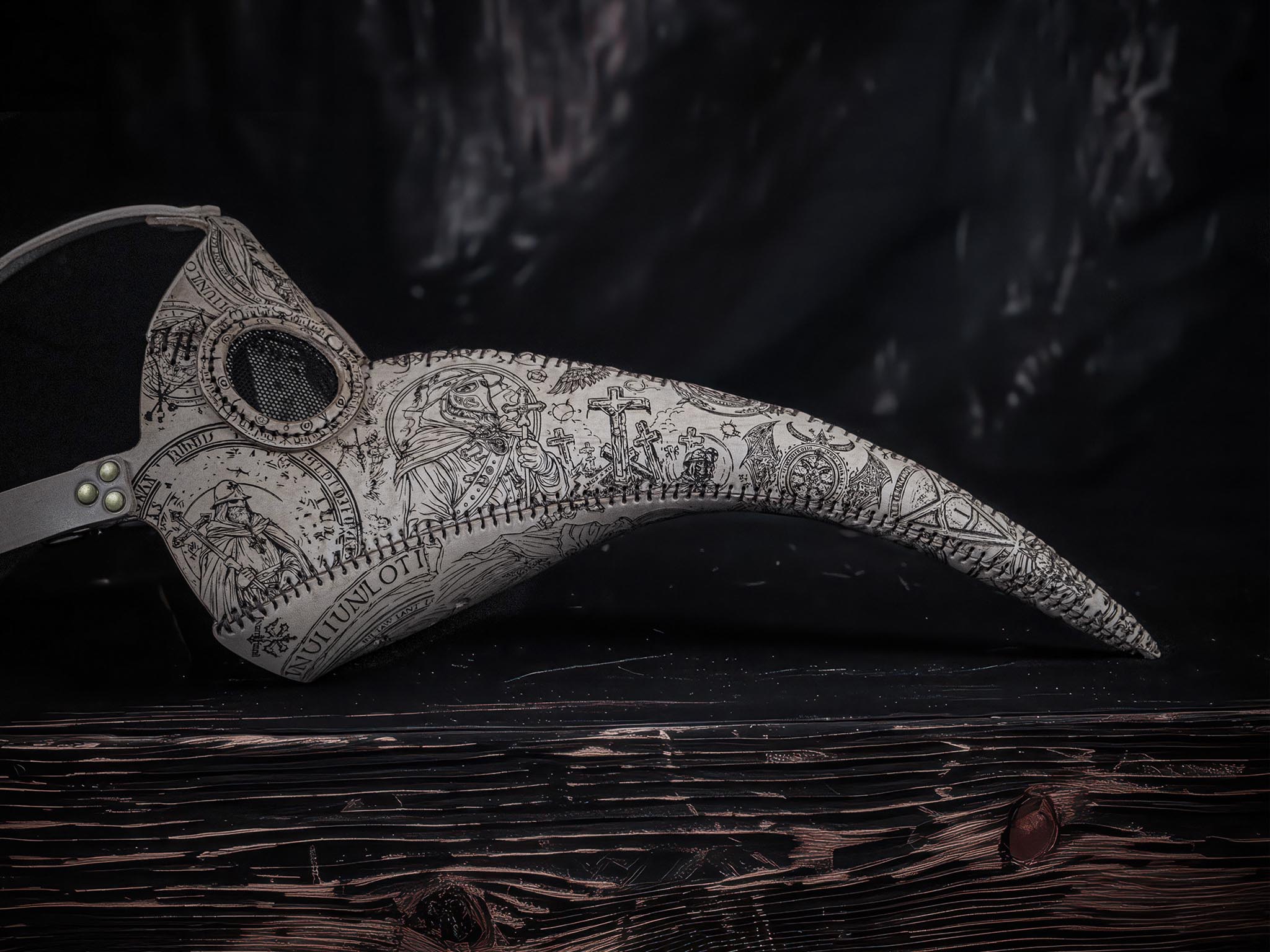
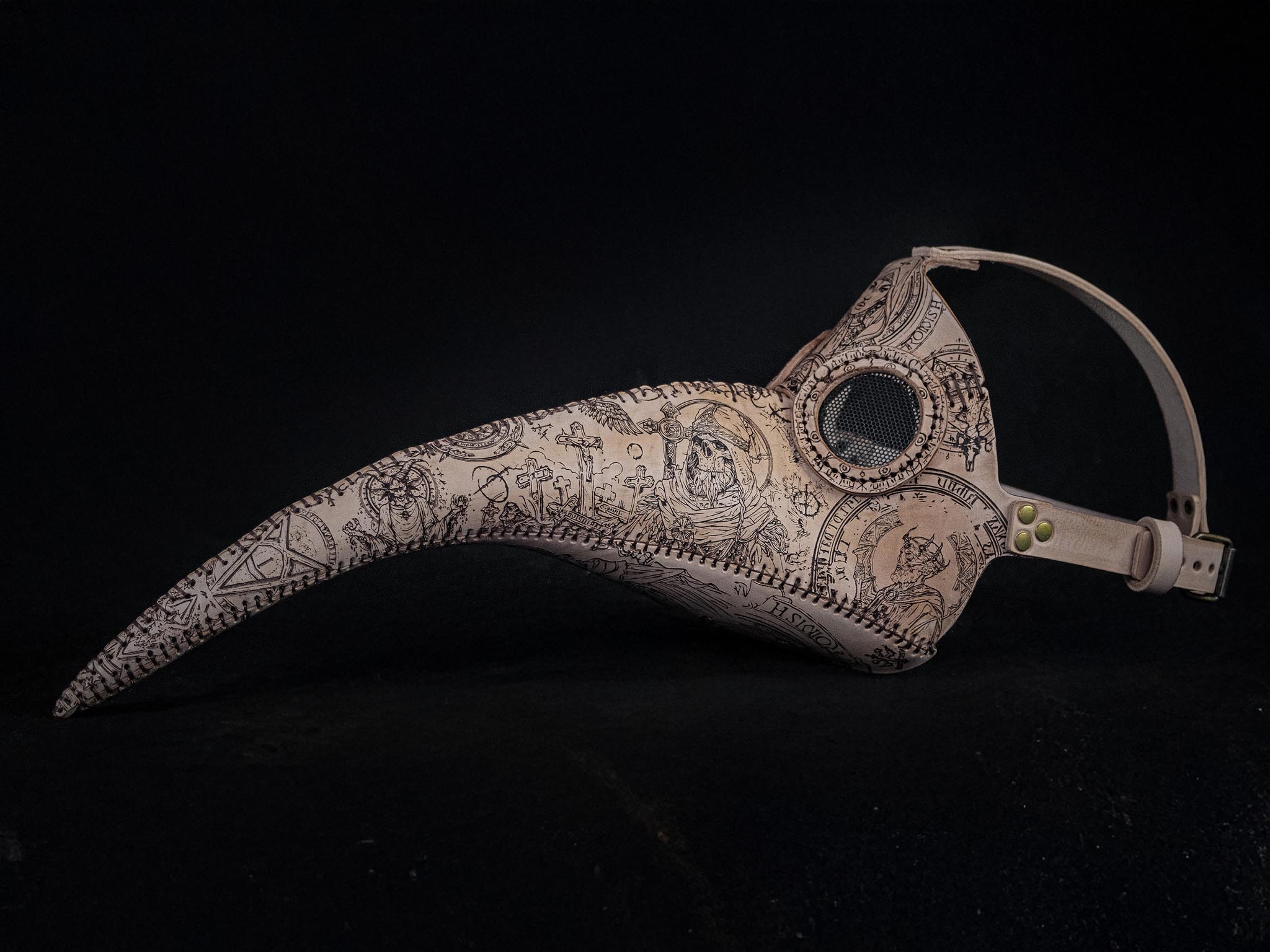
The engraved surface of the mask is arranged according to a triadic scheme often found in liturgical and devotional art of the late 17th century. Within it, no image exists independently - each is part of a hierarchical system intended to affirm a central idea: the union of earthly duty, spiritual oversight, and inevitable reckoning.
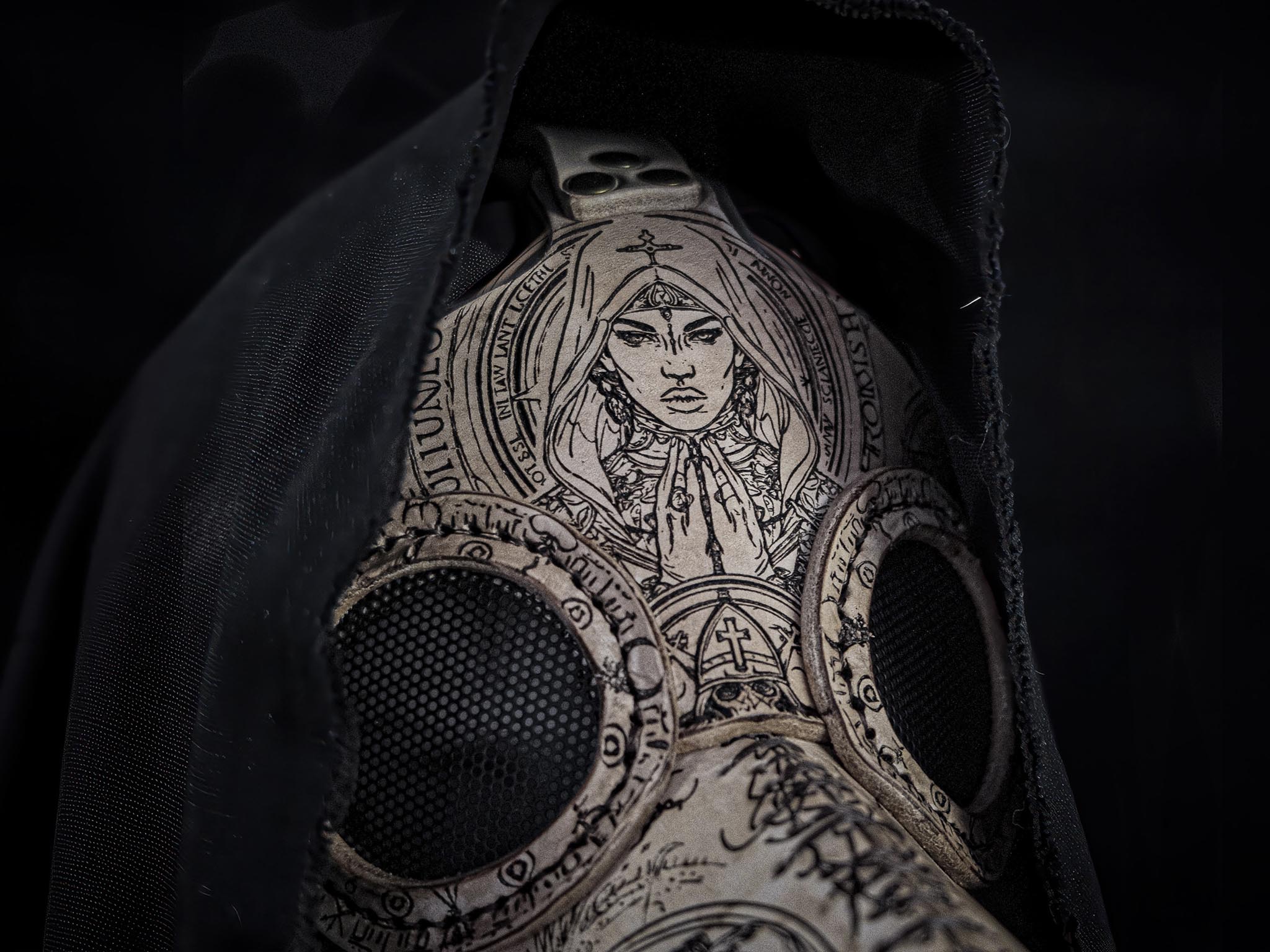
Positioned within a circular frame - resembling a medallion or reliquary - the female figure with hands joined in prayer serves as the visual center of the composition. In the iconographic language of the time, this image was understood as a sign of intercession, a reminder of a saintly presence mediating between the afflicted and the divine. The Latin inscriptions encircling the medallion are not intended for direct reading, but serve a rhetorical function - drawing the eye inward and affirming the sanctity of the central position.
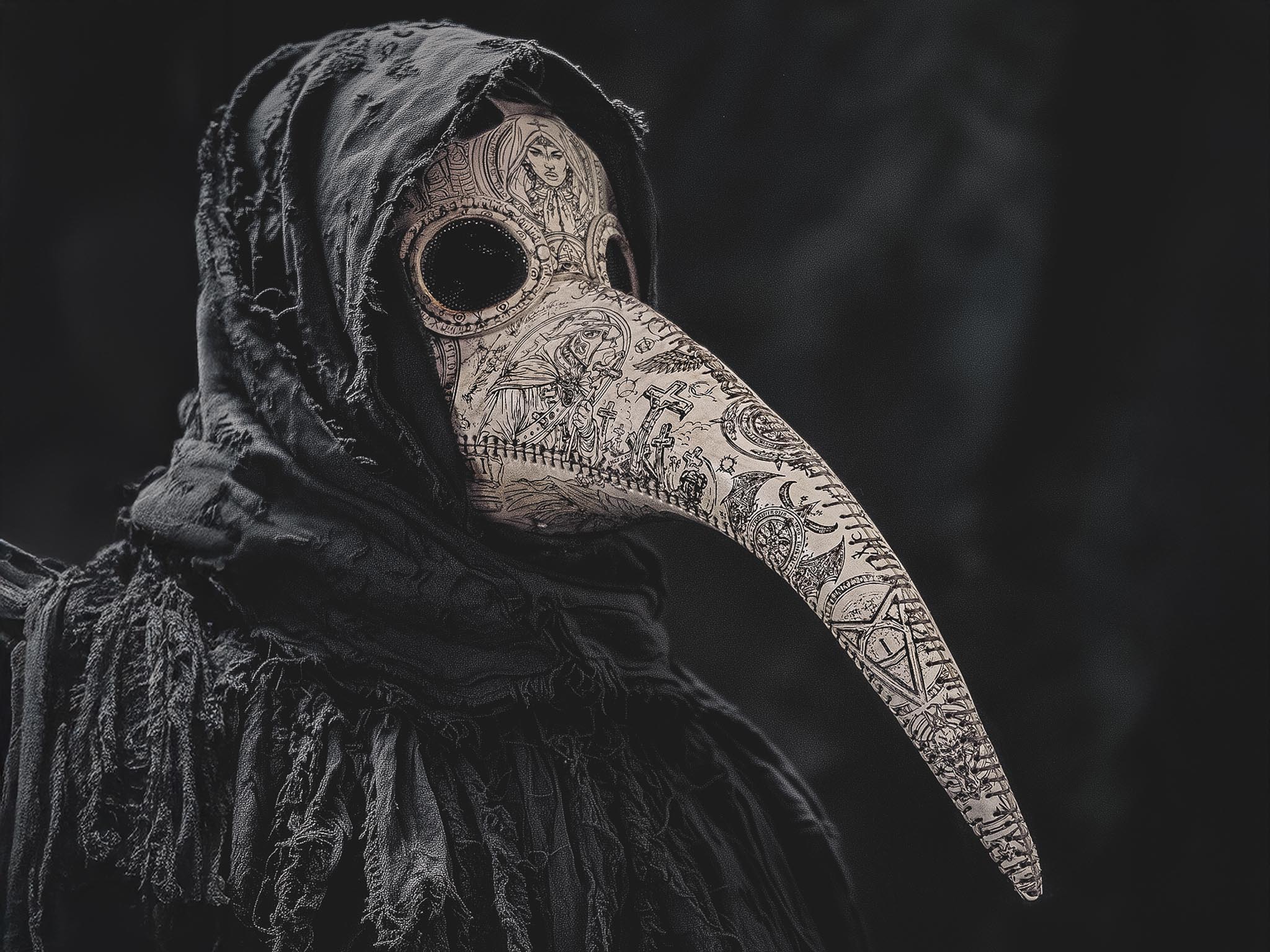
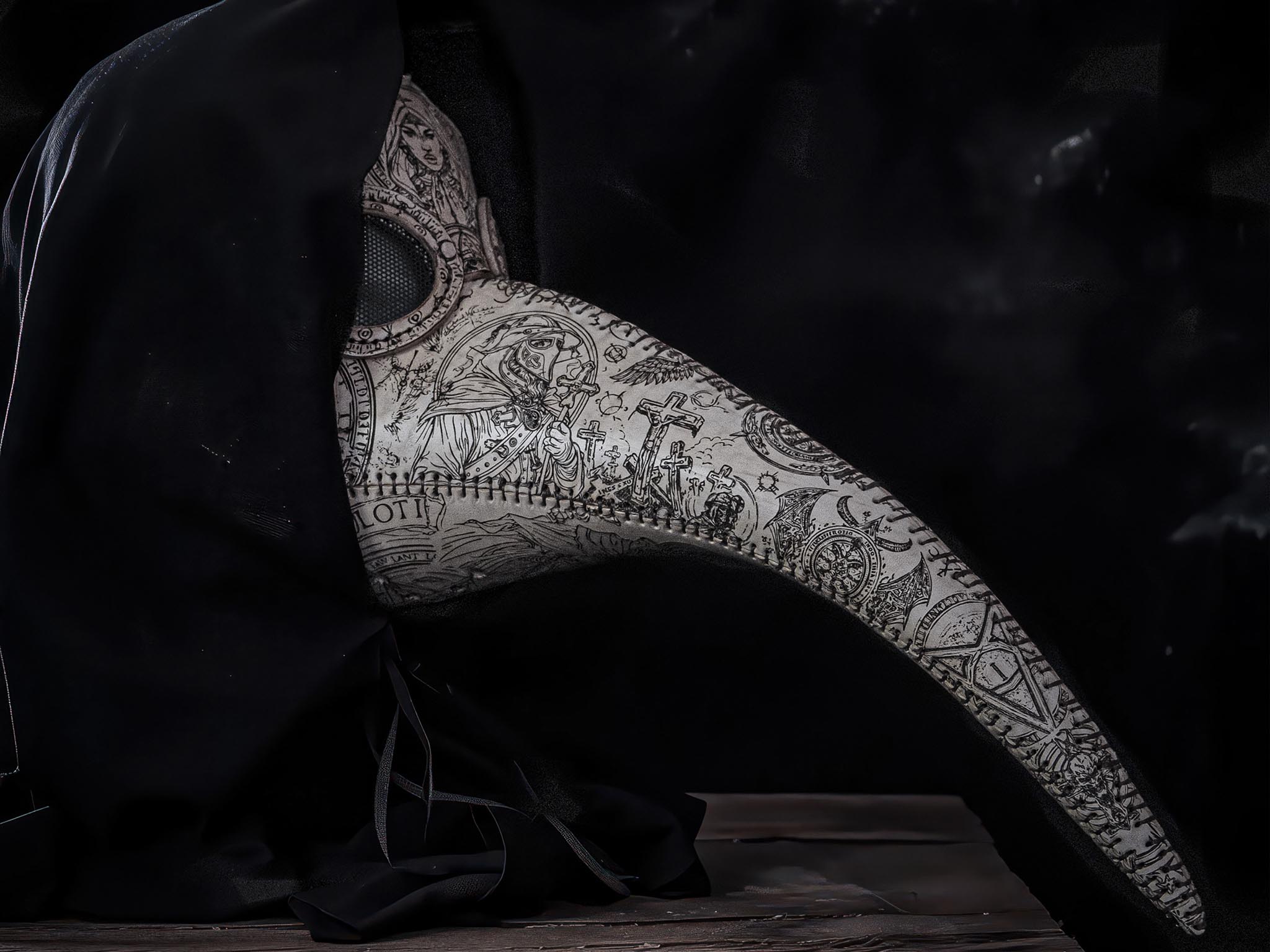
Below, aligned along the same vertical axis, stands the figure clad in the traditional garments of a plague doctor. In his right hand he holds a cross, extended forward - toward a landscape marked by rows of Catholic graves. This is not an allegory, but a depiction of service. The figure stands between the living and the dead, between the execution of duty and the approach of the end. His posture and gaze direct the viewer toward a path not broken by death, but completed by fulfillment.
The final element in the sequence is a mirrored rendering of the same figure - with one change: the face is now a skull. The clothing, posture, and held object remain unchanged. The significance lies not in destruction, but in the preservation of form after the loss of substance. This is not the image of one struck down, but of one who has completed his path. In the writings of the period, such representations were accompanied by formulas affirming constancy of service - usque ad mortem - unto death.
In the ornamental fields surrounding the principal figures are motifs known from both medical treatises and mystical texts of the late medieval period. These do not form an independent narrative, but support the central iconographic burden - serving as secondary yet necessary links in the overall structure.

 Add text engraving