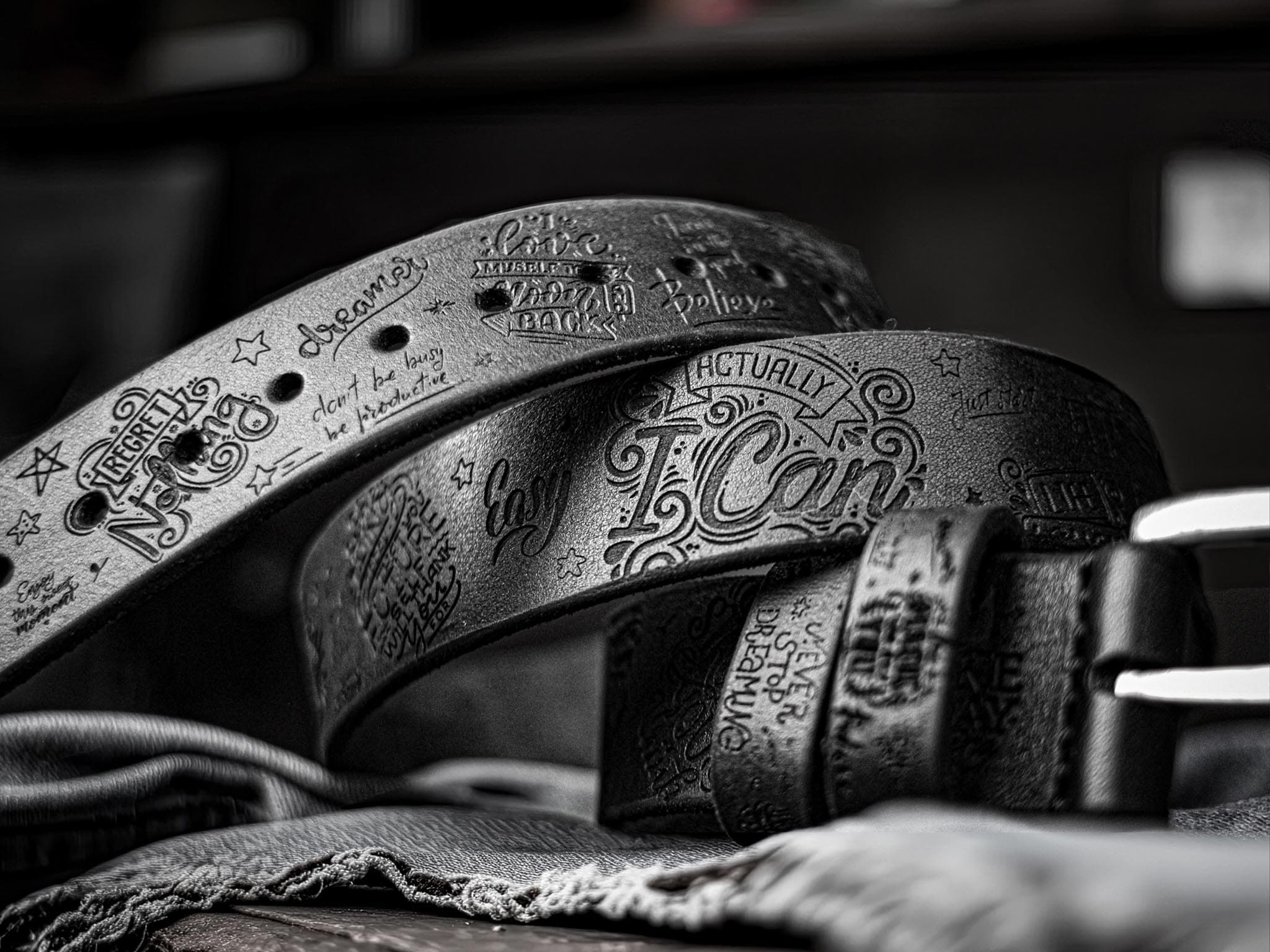
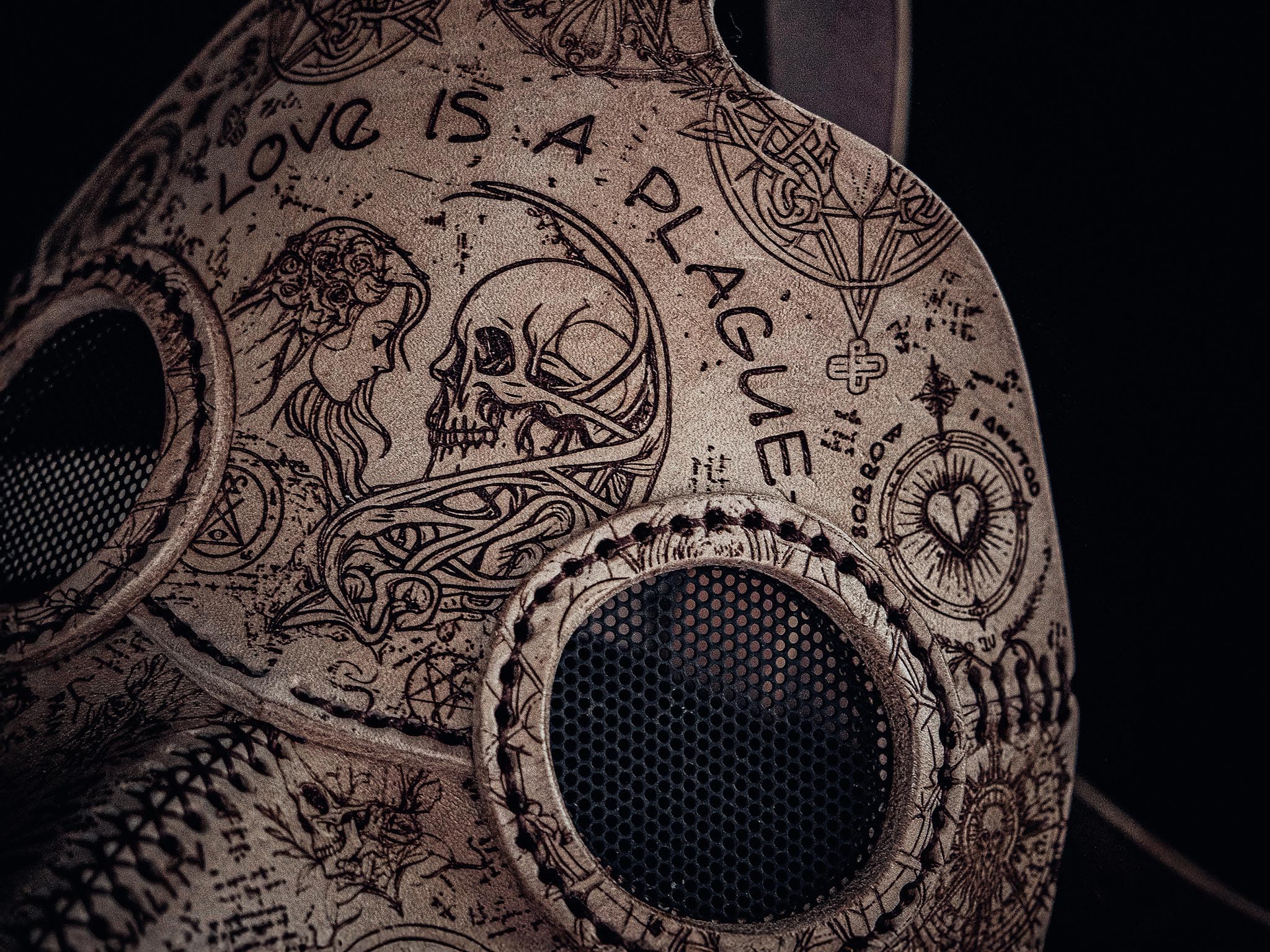
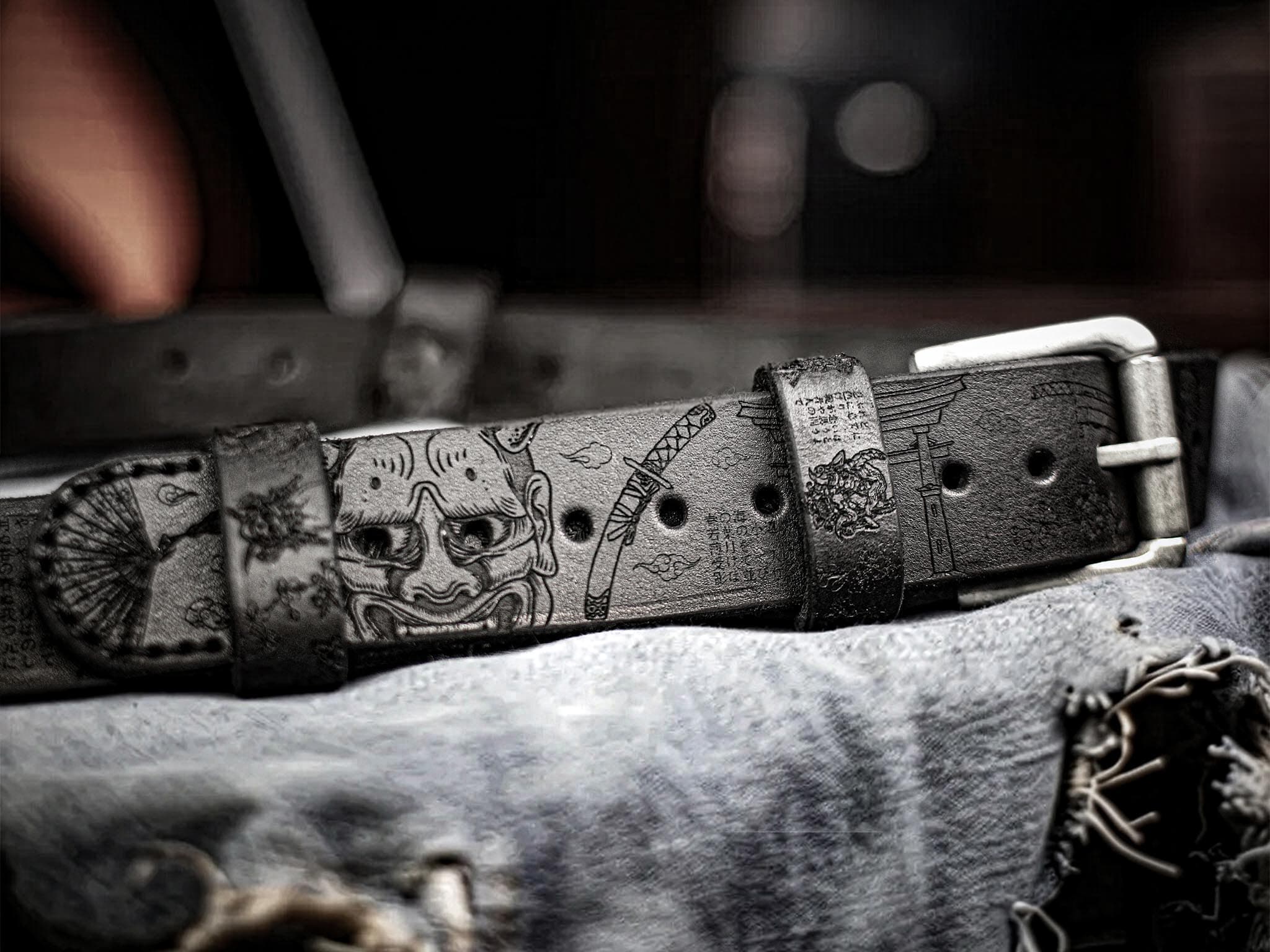
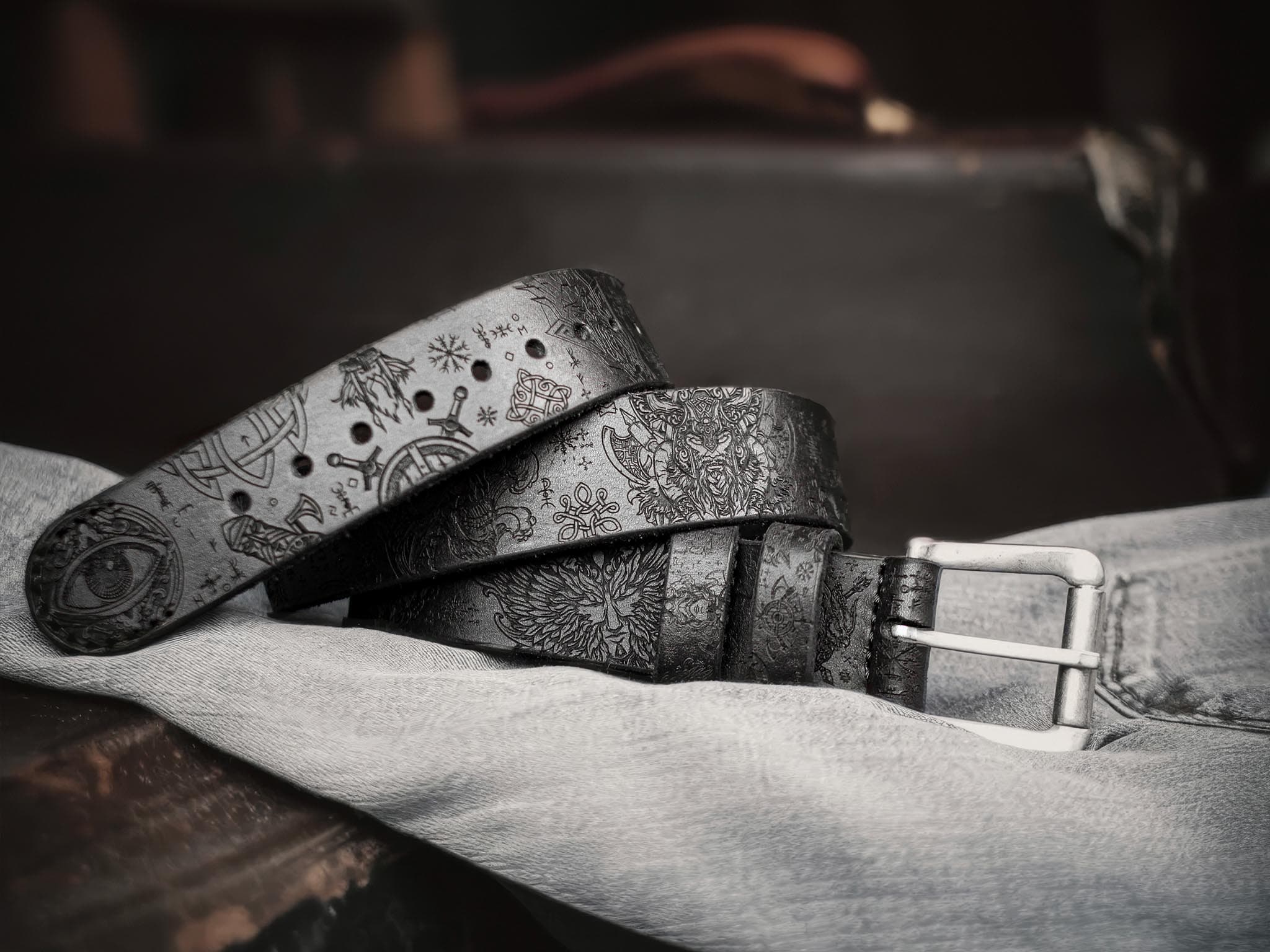
Leather goods don’t just need careful storage - they need peace. Leather keeps “living” even after it’s been tanned. It breathes, it reacts to light, moisture, and air. To preserve its shape, texture, and tone, you have to create a calm, stable environment.
First rule - keep it out of the sun.
Direct light slowly dries leather out, makes it brittle, robs it of elasticity, and eventually leads to cracking. Dyed and engraved surfaces are especially vulnerable - they fade, lose contrast, lose meaning.
Second - avoid dry air, humidity swings, and heat.
Winter heating, summer humidity - these invisible forces distort leather over time. The best storage? A closet, away from windows and radiators, where temperature and humidity stay stable and uneventful.
Leather pieces shouldn't be stacked or crushed. Leather doesn’t like pressure. Belts are best stored hanging or loosely curved. Masks - ideally kept on stands that support their structure. If the item is soft and flexible, let it rest naturally, untouched by rigid surfaces.
Don’t seal it in plastic. Don’t zip it into airtight containers. That creates a microclimate, where even a trace of moisture can trigger mold. Use breathable cotton or linen dust bags instead - they protect from dust, while allowing air to circulate.

.JPG)


'/%3e%3cpath stroke='%23040404' stroke-linecap='square' stroke-linejoin='round' stroke-width='1.8' d='m29 18-7 8 7 8' opacity='.2'/%3e%3c/svg%3e)

 Back
 1574